
You have no recently viewed items.


Classroom Chairs
Classroom Desks
Activity Tables
Height Adjustable Tables
Rocking Chairs & Wobble Stools
Teacher Chairs
Teacher Desks
Classroom Storage
Whiteboards
Book Racks & Book Carts
Cubby & Multi-Storage
Easels & Art Furniture
Interactive Play Furniture
Shelving & Cabinets
Daycare Furniture
Montessori Furnishings & Equipment
Office Workstations
Office Chairs
Reception Desks
Waiting Room Chairs
Filing Cabinets & Pedestals
Monitor Arms
Keyboard Trays
Lighting
Power

Bean Bag Chair Guide: Choosing the Right Fatboy for Your Classroom
Key Takeaways
This guide focuses on Fatboy bean bag chairs specifically designed for Canadian schools in 2026. Whether you’re outfitting a primary reading corner or a high school learning commons, the right soft seating can transform how students engage with their environment.
-
Bean bag chairs support flexible seating, sensory regulation, and informal collaboration across K-12 classrooms and libraries
-
This article compares three specific models from SchoolFurniture.ca: Slim Beanbag Fatboy, Junior Beanbag Fatboy, and Original Beanbag Fatboy
-
Each model suits different age groups and spaces—from early years classrooms to teen breakout zones and staff rooms
-
All three Fatboy options are durable, easy to clean, and built for heavy daily use in Canadian educational settings
-
A strategic mix of sizes can help schools create great flexible learning environments without exceeding their budget
Introduction: Why Bean Bag Chairs Belong in Today’s Classrooms
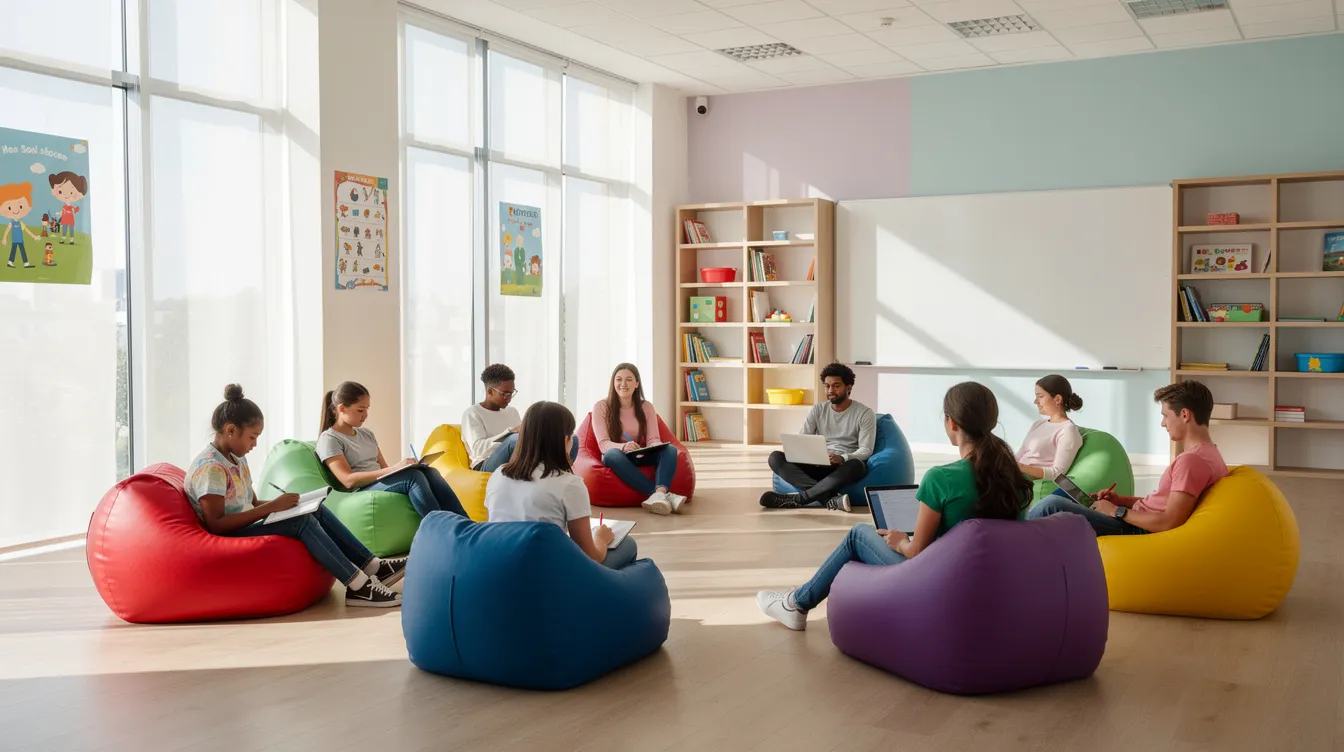
Learning spaces have evolved dramatically since around 2020. The shift toward flexible, student-centred layouts has moved soft seating from a novelty item to a staple in 2024-2026 classroom design. Schools across Canada now prioritize environments that support movement, choice-based seating, and accommodations for neurodiversity under frameworks like Universal Design for Learning.
Bean bags represent a concrete example of this transformation. They create natural reading corners, independent work zones, mindfulness areas, and informal collaboration spots. Current education priorities—student well-being, inclusive design, and sensory support—align perfectly with what soft seating provides. We offer Fatboy bean bag chairs as a tested solution for high-traffic school environments. The rest of this article will compare the Slim, Junior, and Original Fatboy models to help administrators pick the right mix for their facility.
What Makes a Good School Bean Bag Chair?
Not all consumer bean bags are suitable for daily school use. That leather or stuffed sofa-style lounger from a house furniture store might look comfortable, but it won’t survive dozens of kids sitting, jumping, and dragging it across the floor each day. Here’s what schools should search for:
Durability Requirements:
-
Double- or triple-stitched seams with reinforced thread that withstand 50-100 kg dynamic loads
-
Heavy-duty zipper closures that won’t fail under rough handling
-
Tear-resistant fabric rated for 200,000+ abrasion cycles (Martindale test)
-
Material thickness of 900-1680 denier nylon or polyester
Filling Quality: Schools should prioritize EPS (expanded polystyrene) beads over cheaper alternatives. Quality filler provides even weight distribution and posture support, allowing the seat to mold to a child’s body. Memory foam and crushed foam alternatives tend to clump and flatten within 6-12 months under repeated use, creating an uncomfortable experience and requiring expensive replacement.
Safety and Compliance:
-
Child-safe zipper locks preventing bead escape
-
Fire-retardant materials meeting CAN/CGSB-4.2 standards where required by district policy
-
No tiny loose parts that could pose choking hazards
Hygiene Needs: The outer surface must be wipeable and water-repellent—capable of handling spills from juice, markers, and wet outdoor clothing. Look for antimicrobial treatments that reduce bacterial growth between classes.
Ergonomics: A good school bean bag should contour to a student’s body while supporting an upright or semi-reclined posture. The seat should maintain neutral spine alignment during reading or Chromebook work, reducing heat retention and musculoskeletal strain during 45-60 minute sessions.
Overview of Our Fatboy Bean Bag Range for Schools
Fatboy is a Dutch brand founded in 2002 that has become known worldwide for oversized, durable lifestyle bean bags. Schools have adopted these products since the 2010s for their commercial-grade construction tailored to heavy use.
We currently offer three Fatboy models optimized for K-12 environments:
-
Slim Beanbag Fatboy – Narrower profile for older students and small spaces
-
Junior Beanbag Fatboy – Scaled for young kids in primary settings
-
Original Beanbag Fatboy – Full-size flagship for libraries and commons
All three share core traits: tough nylon or polyester covers, EPS bead filling, easy-clean surfaces, and 20+ colour options suitable for school branding. The main differences are size, weight, and age/space suitability—detailed in the following sections.
|
Model |
Approximate Dimensions |
Ideal Age Group |
Best Placement |
Price Tier |
|---|---|---|---|---|
|
Slim |
140 x 90 x 40 cm |
Grades 6-12, Staff |
Corridors, media labs, breakouts |
Mid |
|
Junior |
110 x 80 x 35 cm |
Grade K-4 |
Primary classrooms, sensory corners |
Entry |
|
Original |
170 x 120 x 50 cm |
Grades 5-12 |
Libraries, commons, makerspaces |
Premium |
Slim Beanbag Fatboy: Flexible Seating for Upper Grades and Staff Spaces
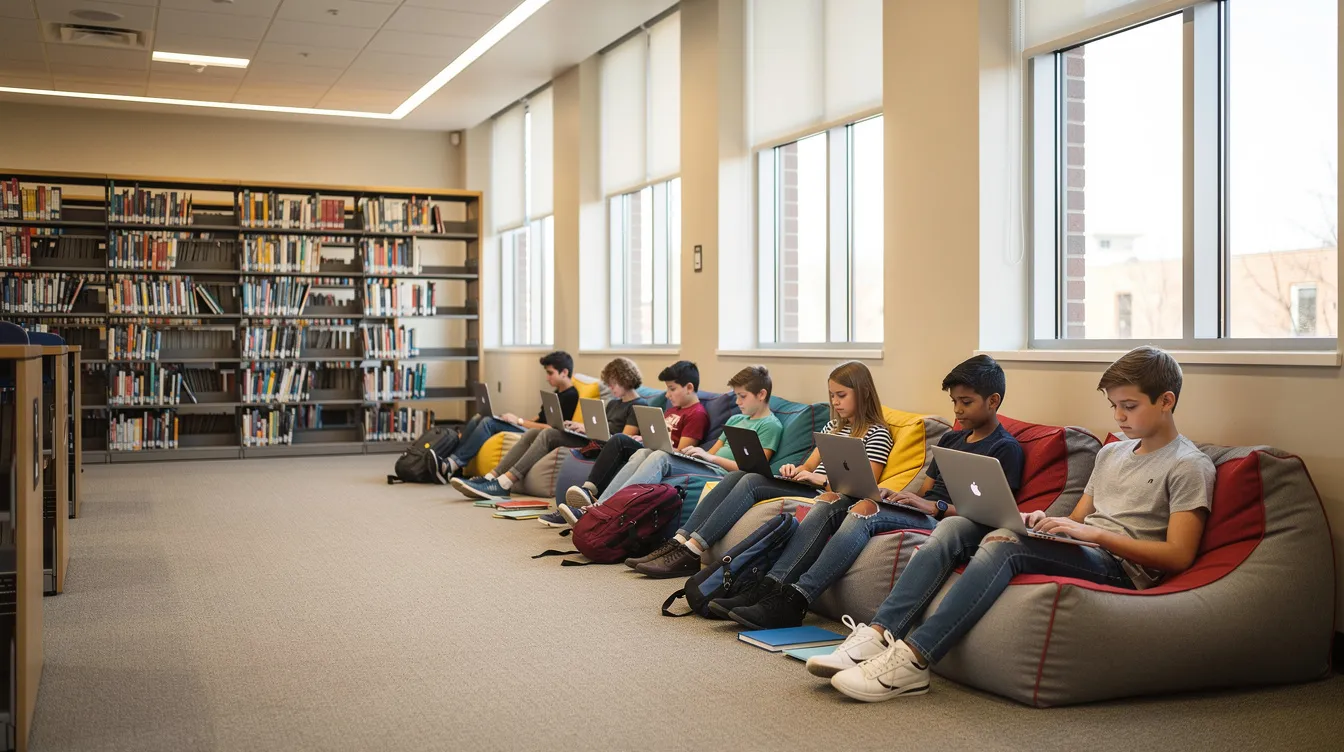
The Slim Beanbag Fatboy offers a narrower, more compact chair ideal for teens, adults, and space-constrained rooms. Its taller, slimmer profile fits better along walls and in corridors where the Original would dominate floor space.
Best Use Cases:
-
Secondary school reading zones and quiet study areas
-
Media labs and computer rooms
-
Hallway breakout nooks
-
Staff wellness rooms and office spaces
-
Teacher resource areas
For grades 6-12, the Slim supports casual laptop work, reading, and peer tutoring without occupying large floor area. Ontario schools have reported 40% higher usage in teen lounges compared to rounder competitors, primarily due to the wall-lean stability teens prefer when watching videos or working independently.
Layout Guidance:
-
Sets of 3-6 per classroom corner or breakout zone
-
4-8 for a high school commons or large media room
-
Can be stacked or leaned vertically after school to continue floor cleaning routines
Cleaning and Care: The slimmer width makes handling easier for custodial staff. Quick-wipe routines at the end of each day with disinfectant sprays work well. Staff can flip and vacuum crevices in roughly 50% less time than with bulkier models—a hard benefit to ignore when maintaining plenty of units across a building.
Junior Beanbag Fatboy: Early Years and Elementary-Friendly Soft Seating
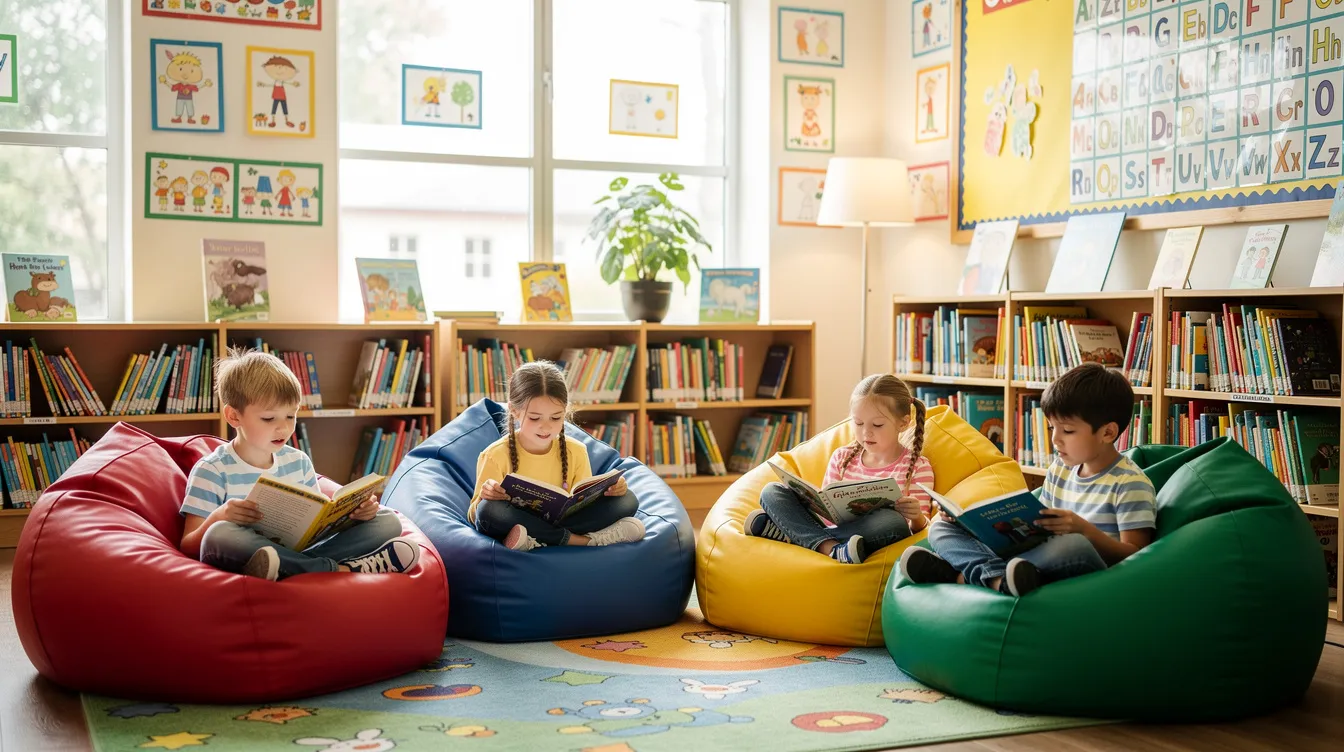
The Junior Beanbag Fatboy is scaled specifically for young kids from Kindergarten through roughly grade 4. It maintains the same rugged outer material and filling as larger Fatboy models but with reduced dimensions that children can move independently.
Ideal School Environments:
-
Primary classrooms and reading circles
-
Sensory corners for self-regulation
-
Quiet corners and de-escalation spaces
-
Early literacy areas in school libraries
-
Counselling offices for young students
The low seat height (approximately 35 cm) and soft contours make this model particularly valuable for inclusive education. Students with autism, ADHD, or anxiety often benefit from the cocooning effect and deep pressure distribution—sensory integration studies suggest up to 70% of students with attention challenges show improved regulation with such seating options.
Practical Guidance:
-
Recommend 2-4 Junior bean bags per primary classroom
-
Use during literacy centres or flexible “choice seating” rotations
-
Place in view of teacher for supervision
Colour Selection Tips:
-
Brighter colours (reds, oranges) create energizing play areas
-
Calmer tones (blues, greens) work better for sensory or de-escalation zones where you need the family of students to curl up and regulate
Original Beanbag Fatboy: Oversized Comfort for Libraries and Commons
The Original Beanbag Fatboy is the classic, full-size model designed for lounging, group reading, and relaxed collaboration. Its generous footprint can be used flat as a lounge mat, folded like a chair, or propped against a wall—making it remarkably versatile.
Best School Locations:
-
Library reading pits and learning commons
-
Makerspaces and creative studios
-
Senior study lounges
-
Drama and media rooms
-
Large breakout zones
This model comfortably seats larger students or allows two younger students to share during buddy reading sessions. BC learning commons that implemented 6-unit clusters reported a 35% increase in group work sessions—students naturally gravitate toward these comfortable collaboration pits.
Practical Considerations:
-
Requires 1.5-2 m² spacing per unit for traffic flow (check local fire codes)
-
Arrange 3-6 Originals to define a casual collaboration zone
-
Use bold school colours to anchor zones visually
-
Place mats underneath on concrete floors to extend fabric life
Because of its size and visibility, colour choice on the Original can help create distinct room zones—school colours for commons, neutral tones for quiet study areas.
Choosing the Right Fatboy for Different School Settings
Most schools benefit from a strategic mix of Slim, Junior, and Original models tailored to specific ages and spaces. Here’s guidance to help you add the right products to your cart:
By Age Group:
-
K-2: Junior (primary choice) with occasional Original for shared reading
-
Grades 3-5: Mix of Junior and Slim as students grow
-
Grades 6-8: Slim (primary) with Original for commons
-
Grades 9-12: Slim for classrooms, Original for libraries and lounges
By Space Type:
-
Classroom: 2-4 Juniors (primary) or 3-4 Slims (secondary)
-
Learning Commons: 6-12 mixed Originals and Slims
-
School Library: Originals for reading pits, Slims along walls
-
Hallway Breakout: Slims (space-efficient)
-
Counselling Office: 1-2 Juniors or Slims
-
Staff Room: Slims or Originals based on room size
Budget Considerations: If funds are limited, prioritize Juniors for early literacy areas (strongest ROI on reading engagement) and Originals for high-impact shared spaces. Slims can be added later as schedules and pedagogy evolve.
Consider involving students in selection—pilot one or two models in spring 2026, gather feedback via surveys, then buy for the following school year based on what actually works in your site.
Practical Tips: Care, Maintenance, and Long-Term Value
School purchasers need products that remain attractive and safe across several years of daily use. With proper care, Fatboy bean bags can provide 5-8 years of service—outperforming standard bead chairs that typically last only 2-4 years.
Cleaning Routines:
-
Daily: Spot-wipe high-touch surfaces
-
Weekly: Full wipe-down with mild soap solution
-
Term-end: Inspect stitching, zippers, and bead compression
The water- and dirt-repellent cover protects against common classroom spills. Mom-approved durability means teachers don’t need to comment on every juice box incident.
Longevity Tips:
-
Rotate bean bags between high-traffic and low-traffic rooms
-
Use felt pads or mats on rough concrete floors
-
Avoid outdoor use unless specifically permitted
-
Don’t exceed recommended weight loads (up to 300 kg capacity)
Storage Practices:
-
Stack Slim and Junior models vertically during breaks
-
Store Originals in pairs on pallets in storage rooms
-
Keep away from direct heat sources
-
Ensure the space allows for summer floor cleaning
Coordinate with teachers on placement so custodial teams can efficiently clean floors around the seating—this keeps the products in stock condition year after year.
How to Order Fatboy Bean Bag Chairs from us
All three models are available through our student chair collection. Visit the page for each product to view colour options, updated patterns, and current price information.
Ordering Process:
-
Select your preferred colour from 20+ options
-
Confirm quantity needed
-
Request a quote for district purchase orders if required
Schools can typically request written quotes, bulk pricing, and delivery timelines for large orders—whether you’re equipping an entire new library wing or adding a few units to existing classrooms across Canada.
Planning Guidance:
-
Order 4-8 weeks before the start of a new term to avoid back-to-school supply delays
-
Contact SchoolFurniture.ca for layout advice and quantity planning
-
Align bean bag selections with existing classroom furniture lines for a cohesive look
Decision-makers should shop early. Stock levels can vary, and popular colours may require longer lead times for 2026 back-to-school orders.
FAQ
Are Fatboy bean bag chairs safe for young students in a classroom setting?
Fatboy bean bags feature strong outer shells, secure zipper closures, and EPS bead fillings that remain contained even under heavy use—making them appropriate for supervised classroom settings. Teachers should establish clear rules (no jumping from height, no roughhousing) and ensure young children cannot open zippers independently. Always check local fire and safety regulations to confirm soft seating is placed in approved areas and doesn’t block exits or circulation paths. The durable construction has been tested for school environments where dozens of students use each chair daily.
How long do Fatboy bean bag chairs typically last in a school environment?
With normal school use and basic care, Fatboy bean bags often provide 5-7 years of service—even in busy libraries or commons where usage is continuous. This longevity makes them less expensive over time compared to cheaper alternatives requiring frequent replacement. Conduct annual inspections for seam wear or bead compression, and rotate units between higher and lower traffic areas to extend lifespan. Adherence to use guidelines (avoiding dragging across rough surfaces) significantly impacts durability.
Can students with posture or mobility needs comfortably use these bean bags?
The EPS bead filling allows each bean bag chair to mold around the user’s body, which many students with specific physical needs find more comfortable than standard rigid chairs. Students with mobility considerations should try the seating with appropriate support (such as wall backing or a low platform) and under guidance from an occupational therapist where possible. Schools should maintain a variety of seating heights and firmness levels so students can select options that best suit their bodies and learning tasks—bean bags complement rather than replace traditional accessible seating.
Do Fatboy bean bag chairs flatten over time, and can they be refilled?
All bead-filled bean bags will compress somewhat after extended use, especially in high-traffic school settings where indoor use is constant. Expect approximately 10-20% volume loss annually in heavily used units. Monitor comfort levels each year and top up or replace beads if significant flattening occurs, following manufacturer guidance. Proper rotation practices and not exceeding recommended weight loads slow compression and maintain shape longer. Most schools agree this minimal maintenance is worthwhile given the engagement benefits students show with flexible seating.
How many bean bag chairs should a typical classroom or library purchase?
General ranges depend on space and purpose: 2-4 Juniors for a primary classroom reading corner, 3-6 Slims or Originals for a middle/high school breakout zone, and 6-12 mixed sizes for a full library or learning commons. The exact number depends on room dimensions, fire code requirements, and what percentage of seating you want to allocate to soft options versus conventional desks and tables. Start with a pilot set in one or two rooms, then scale up based on student and teacher feedback. This approach lets you view real usage patterns before committing to a large order.
- Choosing a selection results in a full page refresh.


!